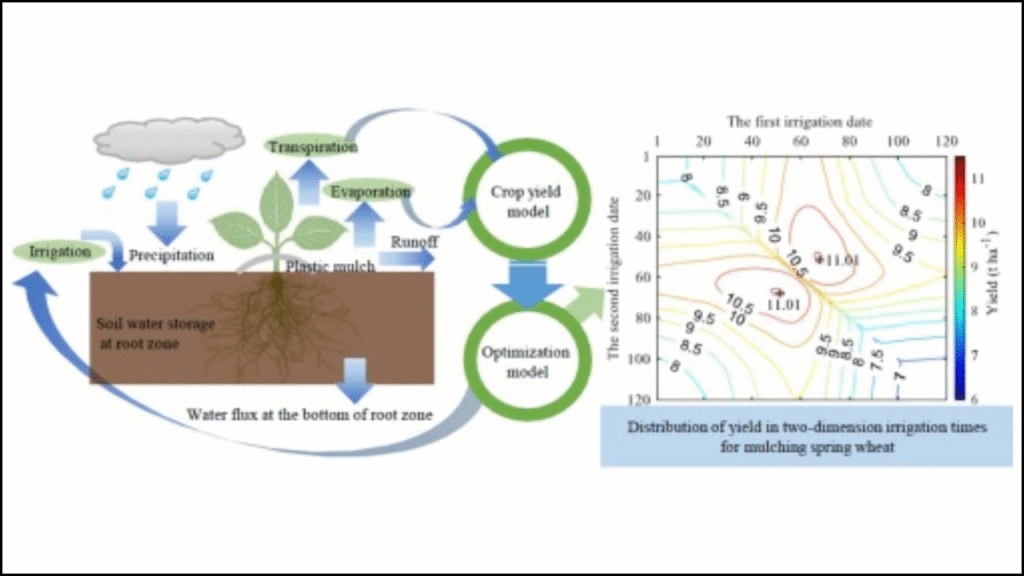
Water scarcity in semi-arid regions creates significant challenges for wheat cultivation. Limited rainfall, high evaporation rates, and irregular water distribution often reduce crop yield and soil fertility. Efficient irrigation management becomes crucial to ensure sustainable wheat production in such environments. Optimizing irrigation practices not only enhances water-use efficiency but also supports food security by stabilizing yields. The following content explains various irrigation techniques, technologies, and management strategies that help in optimizing water use for wheat cultivation in semi-arid areas.
Table of Contents
Importance of Irrigation Optimization in Semi-Arid Wheat Production
Water limitation affects wheat growth, grain filling, and overall productivity.
Efficient irrigation ensures better utilization of available water resources.
Sustainable practices reduce dependency on groundwater and minimize environmental degradation.
Improved soil health results from balanced water application and reduced salinity buildup.
Enhanced crop resilience helps wheat adapt to climatic variations typical of semi-arid zones.
Factors Influencing Irrigation Efficiency
Soil type and texture determine water retention capacity.
Climatic conditions such as temperature and wind influence evapotranspiration.
Irrigation scheduling based on crop growth stages improves water use.
Crop variety selection affects drought tolerance and root depth.
Technology adoption in irrigation systems enhances precision and reduces wastage.
Factor
Influence on Irrigation Efficiency
Soil Texture
Sandy soils require frequent irrigation; clay soils retain water longer.
Regular soil testing ensures optimal nutrient-water balance for wheat crops.
Challenges in Irrigation Optimization
The high cost of modern irrigation technologies limits small farmers’ access.
Water quality issues, such as salinity, affect long-term soil health.
Inadequate infrastructure for water storage and distribution.
Climate change increases uncertainty in rainfall and temperature patterns.
Policy gaps in water management reduce the adoption of efficient systems.
Future Strategies for Sustainable Irrigation
Integrated water management combining surface and groundwater sources.
Government incentives to promote advanced irrigation systems.
Research on drought-resistant wheat varieties suited to semi-arid conditions.
Community-Based Water-Sharing Systems for Equitable Resource Allocation.
Capacity-building programs to train farmers in precision irrigation techniques.
Summing Up
Efficient irrigation in semi-arid regions remains the cornerstone of sustainable wheat production. Strategic water management, the adoption of modern technologies, and an emphasis on soil conservation create a balanced framework for enhancing yields while preserving limited resources. Continuous innovation and farmer education will ensure that wheat cultivation in semi-arid zones remains both productive and environmentally responsible.
She is a creative and dedicated content writer who loves turning ideas into clear and engaging stories. She writes blog posts and articles that connect with readers. She ensures every piece of content is well-structured and easy to understand. Her writing helps our brand share useful information and build strong relationships with our audience.