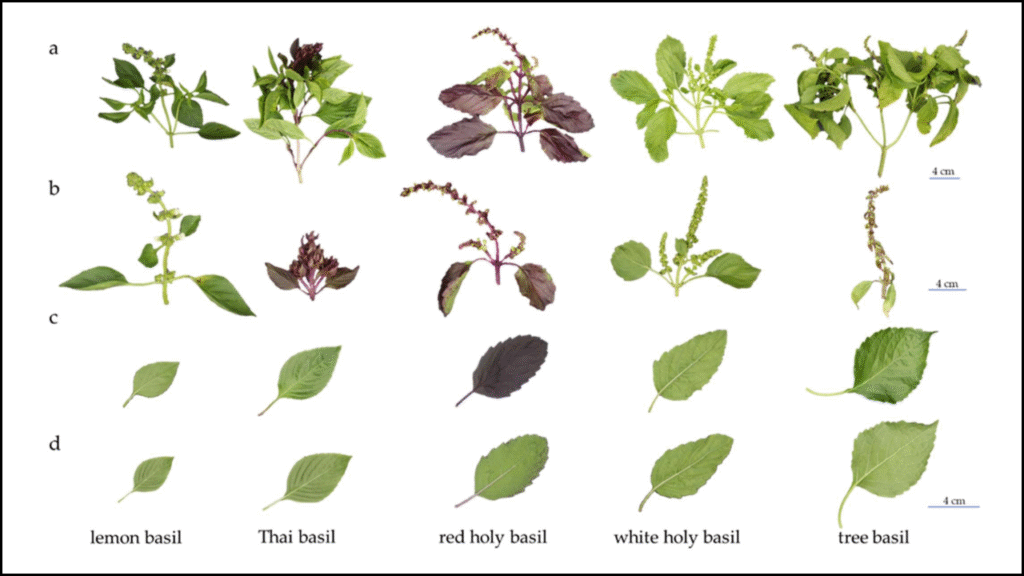
Basil (Ocimum basilicum L.) is a globally cultivated aromatic herb widely recognized for its culinary, medicinal, and industrial importance. The plant produces essential oils rich in bioactive compounds such as linalool, methyl chavicol, eugenol, and citral, which contribute to its fragrance and therapeutic properties. Variation in essential oil yield among basil varieties depends on genetic composition, environmental conditions, and cultivation practices. Understanding the differences in essential oil yield among basil varieties helps farmers, perfumers, and pharmaceutical industries optimize production and select the most profitable cultivars for commercial purposes.
Table of Contents
Overview Of Basil And Its Essential Oils
Basil belongs to the Lamiaceae family, which includes many aromatic herbs like mint and rosemary.
Essential oil is produced mainly in the glandular trichomes located on leaves, flowers, and stems.
Oil composition varies significantly among varieties due to genetic diversity and biochemical pathways.
The essential oil is extracted primarily by steam distillation or hydrodistillation, depending on the variety and end use.
Basil oil has applications in the pharmaceutical, cosmetic, food, and aromatherapy industries.
Factors Influencing Essential Oil Yield
Factor
Description
Impact On Yield
Genetic Variation
Differences in species and cultivars.
Determines oil quantity and composition.
Growth Stage At Harvest
The flowering stage yields higher oil concentration.
Flowering stage yields higher oil concentration.
Environmental Conditions
Includes temperature, light, and humidity.
Warm, sunny climates enhance oil synthesis.
Soil Fertility And Nutrition
Balanced nutrients promote leaf growth and trichome development.
Increases oil-producing tissues.
Distillation Method
Type of extraction process used.
Influences recovery efficiency and oil quality.
Major Basil Varieties And Their Characteristics
Variety
Common Name
Main Aroma Compound
Typical Essential Oil Content (%)
Color & Odor Characteristics
Sweet Basil (O. basilicum var. basilicum)
Common culinary basil
Linalool, eugenol
0.5 – 1.2
Clear to pale yellow; sweet floral odor
Holy Basil (O. tenuiflorum)
Tulsi
Eugenol, methyl eugenol
0.7 – 1.5
Yellowish; clove-like aroma
Lemon Basil (O. × citriodorum)
Citrus basil
Citral, limonene
0.3 – 0.8
Light yellow; lemon scent
Cinnamon Basil (O. basilicum var. cinnamomum)
Spicy basil
Cinnamaldehyde, eugenol
0.6 – 1.0
Pale yellow; warm spicy fragrance
Camphor Basil (O. kilimandscharicum)
African blue basil
Camphor, 1,8-cineole
1.0 – 2.0
Yellowish; camphoraceous odor
Clove Basil (O. gratissimum)
African basil
Eugenol, thymol
1.2 – 2.5
Pale yellow; clove-like scent
Thai Basil (O. basilicum var. thyrsiflora)
Asian culinary basil
Methyl chavicol
0.5 – 1.0
Pale greenish; anise-like aroma
Essential Oil Yield Performance Among Varieties
Sweet basil remains the most cultivated variety worldwide due to its balanced aroma and stable oil content.
Camphor basil and clove basil show the highest essential oil yield due to dense glandular trichome development.
Lemon basil and Thai basil have moderate oil yields but are prized for unique scent profiles suitable for perfumery.
Holy basil (Tulsi) yields oils rich in eugenol, making it ideal for medicinal and therapeutic use.
Genetic diversity results in significant variation even within the same species, depending on local environmental adaptation.
Comparative Analysis Of Essential Oil Yield Under Similar Conditions
Basil Variety
Average Fresh Biomass (t/ha)
Essential Oil Yield (kg/ha)
Dominant Compound (%)
Suitable Use
Sweet Basil
15 – 25
80 – 120
Linalool (60–70)
Culinary, cosmetics
Holy Basil
10 – 18
90 – 150
Eugenol (65–75)
Medicinal, spiritual
Lemon Basil
12 – 20
50 – 90
Citral (60–65)
Perfumery, flavoring
Cinnamon Basil
14 – 22
70 – 110
Cinnamaldehyde (55–65)
Aromatic oils
Clove Basil
18 – 28
120 – 200
Eugenol (70–80)
Pharmaceutical
Camphor Basil
16 – 26
130 – 210
Camphor (60–70)
Insect repellent, medicinal
Thai Basil
13 – 21
60 – 100
Methyl chavicol (75–80)
Food industry
Chemical Composition And Quality Of Essential Oils
Linalool-rich oils from Sweet Basil are preferred in perfumes and cosmetics due to their floral and fresh notes.
Eugenol-rich oils from Holy and Clove Basil have strong antiseptic and anti-inflammatory properties.
Citral-dominant oils from Lemon Basil possess a lemony fragrance used in detergents and beverages.
Cinnamaldehyde gives Cinnamon Basil its warm, spicy aroma valued in flavoring agents.
Camphor and cineole compounds in Camphor Basil make it suitable for medicinal balms and insect repellents.
Influence Of Growth Stage On Oil Yield
Maximum essential oil yield is achieved at the full flowering stage, when glandular trichomes are most active.
Harvesting during the early vegetative stage results in lower oil content but higher leaf biomass.
Late harvesting after seed formation reduces both oil quantity and quality due to volatile loss.
Environmental stress, such as mild drought, can sometimes increase oil concentration due to secondary metabolite synthesis.
Plant spacing affects microclimate; optimal spacing of 40×40 cm gives maximum leaf area and oil yield.
Frequent pruning or regrowth harvests can increase total annual oil yield.
Sustainable practices like mulching and drip irrigation maintain moisture and support continuous oil synthesis.
Extraction Techniques And Their Effect On Yield
Extraction Method
Description
Oil Recovery Efficiency (%)
Oil Quality
Steam Distillation
A common industrial method uses vaporized water.
70 – 85
High-quality, pure oil
Hydrodistillation
Plant material is immersed in water and boiled.
60 – 80
Suitable for small-scale production
Solvent Extraction
Uses organic solvents to extract aromatic compounds.
90 – 95
Higher yield but lower purity
Microwave-Assisted Distillation
Modern technique combining heat and pressure.
85 – 92
Fast extraction with minimal degradation
Industrial Applications Of Basil Essential Oils
Pharmaceuticals: Used in anti-inflammatory, antimicrobial, and antioxidant formulations.
Cosmetics: Included in perfumes, soaps, and skincare products for a refreshing scent.
Food Industry: Acts as a flavor enhancer in sauces, beverages, and confectionery.
Aromatherapy: Promotes relaxation, mental clarity, and stress relief.
Agriculture: Natural insecticidal and antifungal properties reduce chemical pesticide dependence.
Economic Importance Of High-Yielding Varieties
High oil yield directly influences profitability in basil cultivation.
Clove and camphor basil varieties generate higher revenue per hectare due to their strong oil concentration.
Market demand for specific aroma profiles determines commercial value more than sheer oil quantity.
Value addition through organic certification or steam-distilled labeling enhances market appeal.
Future Research Directions
Genetic improvement through selective breeding for enhanced oil content and stable composition.
Molecular studies to identify genes responsible for key aroma compounds.
Development of climate-resilient varieties with consistent oil yield under stress.
Integration of precision agriculture and remote sensing tools for real-time monitoring of oil content.
Exploration of eco-friendly extraction technologies to improve yield and purity simultaneously.
Final Analysis
Basil varieties exhibit significant diversity in essential oil yield and chemical composition. Genetic makeup, environmental conditions, and cultivation practices play critical roles in determining oil productivity. Clove basil and camphor basil are high-yielding, while sweet basil remains most popular for culinary use. Appropriate selection of variety, harvest timing, and extraction method ensures optimal yield and quality. With rising global demand for natural essential oils, improving basil cultivation and processing efficiency can contribute substantially to the aromatic and medicinal plant industries. Sustainable production and advanced breeding techniques will continue to enhance the potential of basil as a high-value essential oil crop.
She is a creative and dedicated content writer who loves turning ideas into clear and engaging stories. She writes blog posts and articles that connect with readers. She ensures every piece of content is well-structured and easy to understand. Her writing helps our brand share useful information and build strong relationships with our audience.