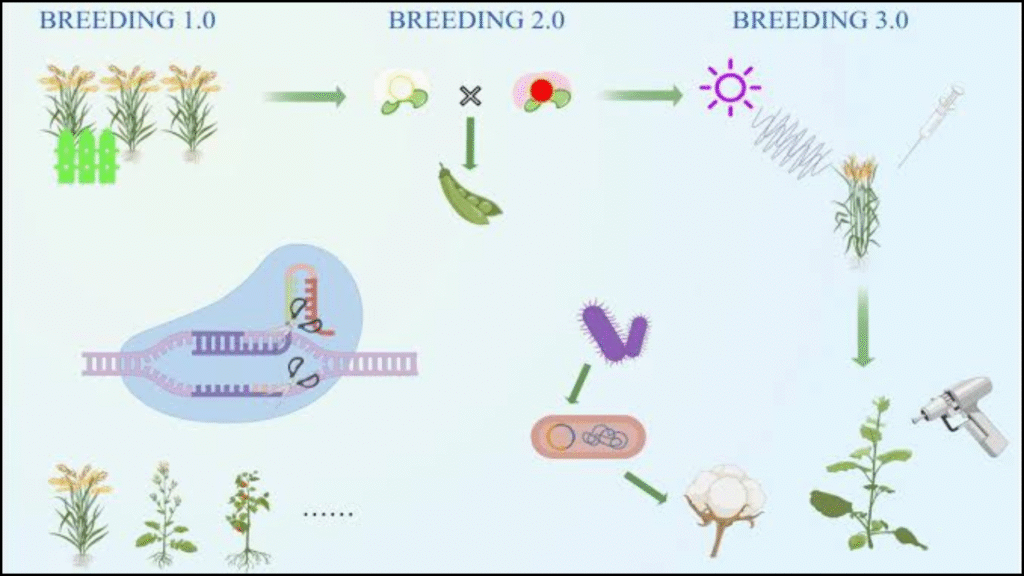
Barley (Hordeum vulgare L.) is a vital cereal crop cultivated across temperate regions for food, feed, and malt production. Protein content in barley grains significantly influences its nutritional value, brewing quality, and industrial applications. Developing high-protein barley varieties is a major breeding goal aimed at improving both human nutrition and livestock feed efficiency. The challenge lies in balancing high grain protein content with desirable yield, adaptability, and stress tolerance. Modern breeding strategies, integrating classical selection and molecular techniques, have opened new possibilities for developing high-protein barley suited to diverse environments.
Table of Contents
Importance Of High-Protein Barley
- High-protein barley improves livestock feed efficiency and nutritional quality.
- It serves as a rich source of amino acids, especially lysine, essential for human and animal health.
- Enhanced protein content increases market value for food and brewing industries.
- High-protein varieties exhibit better stress resilience under nutrient-deficient and dry conditions.
- It supports functional food production, contributing to human dietary improvement.
Objectives Of High-Protein Barley Breeding
- Develop genotypes with high and stable protein content.
- Maintain a balance between yield and protein quality.
- Improve nitrogen use efficiency (NUE) to reduce fertilizer dependency.
- Enhance resistance to diseases and abiotic stresses.
- Produce barley varieties suitable for diverse agro-ecological zones.
Key Factors Influencing Protein Content In Barley
| Factor | Description | Impact On Protein Level |
|---|---|---|
| Genetic Makeup | Determines the potential for protein synthesis. | Primary determinant of protein variation. |
| Nitrogen Fertilization | Affects amino acid formation and grain composition. | Increases protein but may reduce yield. |
| Environmental Conditions | Includes temperature, rainfall, and soil type. | Influences nitrogen uptake and grain filling. |
| Growth Stage Management | Timely sowing and harvesting affect protein accumulation. | Late sowing may increase protein due to stress. |
| Varietal Differences | Different cultivars exhibit distinct protein responses. | Genetic diversity impacts breeding outcomes. |
Traditional Breeding Approaches
Conventional breeding methods have long been used to enhance protein content in barley through selection and hybridization.
- Mass Selection: Selection of high-protein plants within heterogeneous populations.
- Pedigree Selection: Involves crossing and successive selection in segregating generations.
- Backcross Breeding: Used to transfer high-protein genes into elite cultivars.
- Recurrent Selection: Improves additive gene effects through cyclic selection.
- Mutation Breeding: Induces genetic variation using physical or chemical mutagens for novel traits.
Molecular Breeding Strategies
Recent molecular advancements have accelerated the identification and manipulation of protein-related genes.
| Technique | Application | Outcome |
|---|---|---|
| Marker-Assisted Selection (MAS) | Utilizes DNA markers linked with high-protein traits. | Speeds up breeding and ensures accuracy. |
| Quantitative Trait Loci (QTL) Mapping | Identifies genomic regions controlling protein synthesis. | Helps in selecting high-protein genotypes. |
| Genome-Wide Association Studies (GWAS) | Explores associations between genotypes and phenotypes. | Detects multiple loci influencing protein content. |
| Genomic Selection (GS) | Predicts genetic performance using genome data. | Enhances selection efficiency for complex traits. |
| Transcriptomic Analysis | Studies gene expression during grain filling. | Reveals candidate genes regulating protein biosynthesis. |
Major Genes Associated With Protein Content In Barley
- HvNAM-1 and HvNAM-2: Regulate nitrogen remobilization during grain development.
- Hvmlo: Associated with resistance and nutrient use efficiency.
- HSP (Heat Shock Protein) Family Genes: Influence protein synthesis under stress.
- HvNRT1 and HvAMT1: Involved in nitrogen transport and assimilation.
- Storage Protein Genes (hordeins): Control major seed storage proteins in barley.
Breeding Pipeline For High-Protein Barley Development
| Stage | Activity | Expected Outcome |
|---|---|---|
| Germplasm Collection | Gather diverse barley accessions with varying protein levels. | Establish a wide genetic base. |
| Parental Selection | Identify genotypes combining high yield and high protein. | Ensure balance between traits. |
| Crossing Program | Hybridize selected parents. | Generate diverse segregating populations. |
| Screening And Selection | Evaluate F₂ and later generations using protein assays. | Identify high-protein, stable lines. |
| Marker-Based Selection | Apply molecular markers linked to target traits. | Accelerate breeding accuracy. |
| Field Evaluation | Test selected lines under varied environments. | Confirm stability and adaptability. |
| Variety Release | Register and commercialize superior cultivars. | Disseminate improved varieties to farmers. |
Integration Of Biotechnology In Protein Improvement
- CRISPR/Cas9 Genome Editing: Enables precise modification of genes associated with protein metabolism.
- RNA Interference (RNAi): Used to suppress undesirable storage proteins affecting quality.
- Proteomics: Studies complete protein profiles to identify desirable traits.
- Metabolomics: Explores metabolic pathways linked with amino acid synthesis.
- Bioinformatics Tools: Support analysis of gene networks and QTL data for protein enhancement.
Challenges In Breeding High-Protein Barley
| Challenge | Impact On Breeding | Possible Solution |
|---|---|---|
| Negative Correlation Between Yield And Protein | Higher protein often reduces yield potential. | Develop balanced genotypes through index selection. |
| Environmental Variability | Protein content fluctuates under changing climates. | Conduct multi-environment trials for stability. |
| Limited Genetic Resources | Narrow genetic base restricts variability. | Use wild relatives and landraces for diversity. |
| Breeding Duration | Traditional methods take longer cycles. | Apply genomic selection and speed breeding. |
| Quality Trade-Offs | High-protein may affect malting quality. | Target dual-purpose genotypes with balanced traits. |
Role Of Landraces And Wild Relatives
- Wild barley species such as Hordeum spontaneum serve as valuable sources of high-protein genes.
- Landraces adapted to marginal soils contribute traits for nitrogen efficiency and stress tolerance.
- Hybridization between elite cultivars and landraces introduces new allelic combinations for enhanced protein synthesis.
- Preservation of genetic resources ensures long-term availability of diverse protein traits for breeding programs.
Environmental And Agronomic Considerations
- Nitrogen management directly influences grain protein concentration.
- Deficient irrigation and controlled stress conditions sometimes enhance protein accumulation.
- Crop rotation with legumes improves nitrogen availability and soil fertility.
- Precision agriculture supports site-specific nitrogen application for protein optimization.
Recent Advances In Protein-Focused Barley Breeding
- Identification of major QTLs on chromosomes 2H and 6H related to grain protein content.
- Development of genome-edited barley lines with enhanced amino acid profiles.
- Implementation of speed breeding techniques to shorten generation time.
- Use of multi-omics integration (genomics, transcriptomics, proteomics) for holistic improvement.
- Collaboration between public research institutes and private breeders to expand variety testing.
Economic And Nutritional Benefits Of High-Protein Barley
- Provides high-value grain for livestock feed and human consumption.
- Increases income for farmers through value-added markets.
- Reduces dependence on protein supplements in animal feed.
- Enhances nutritional security in food-deficient regions.
- Encourages sustainable agriculture by reducing fertilizer inputs.
Future Directions For High-Protein Barley Breeding
- Utilize genome editing for targeted protein improvement without yield loss.
- Apply artificial intelligence (AI) for genomic prediction and selection accuracy.
- Expand international germplasm exchange to enrich genetic diversity.
- Promote climate-resilient breeding programs for protein stability.
- Strengthen public-private partnerships to commercialize improved varieties.
Closing Perspectives
Genetic improvement of barley for high protein content requires a multi-faceted breeding approach combining traditional and modern methods. Exploiting genetic variability, molecular markers, and biotechnological tools enables precise and efficient selection for superior genotypes. Balancing protein content with yield and quality remains a core challenge, but integrated breeding strategies supported by genomics and advanced analytics offer promising solutions. Sustainable production of high-protein barley varieties will contribute significantly to global nutrition, feed efficiency, and agricultural resilience in the future.