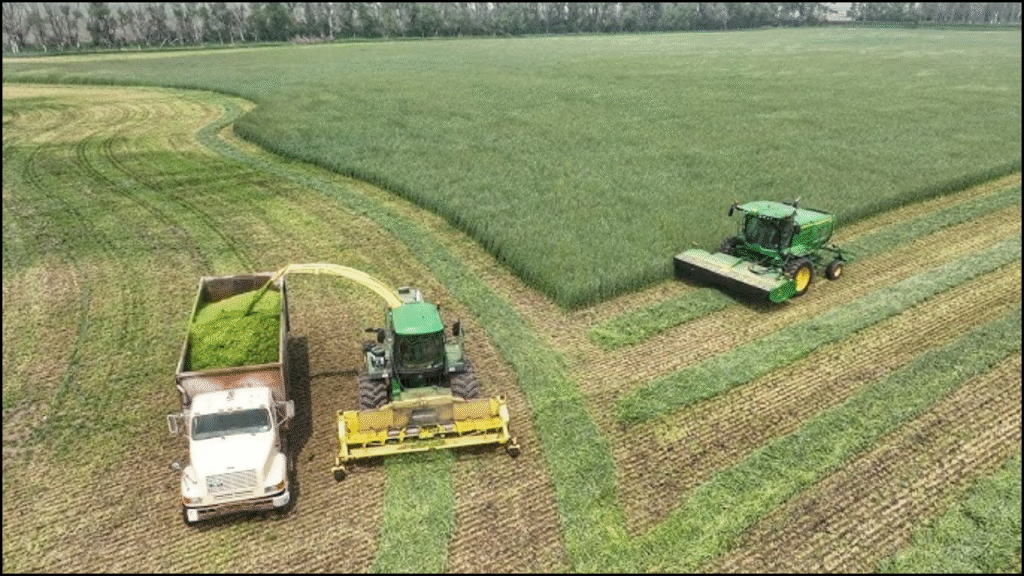
Silage quality plays a significant role in maintaining livestock health and productivity. The timing of harvest is one of the most crucial factors that influence the nutritional composition, fermentation characteristics, and storage stability of silage. Proper harvesting ensures optimal moisture content, balanced nutrient levels, and efficient preservation through fermentation. Different crops used for silage, such as maize, sorghum, and grasses, respond differently to harvest timing, which directly impacts their digestibility, crude protein levels, and energy content. Understanding the relationship between harvesting time and silage quality is essential for achieving high-quality feed and minimizing nutrient losses during storage.
Table of Contents
Importance of Harvest Timing in Silage Production
- Nutrient Preservation: Harvesting at the right stage helps retain proteins, carbohydrates, and essential minerals.
- Fermentation Efficiency: Proper timing ensures ideal sugar levels for lactic acid fermentation.
- Moisture Control: Adequate dry matter content prevents spoilage and enhances compaction.
- Palatability: Appropriate harvesting results in silage that livestock readily consume.
- Economic Efficiency: Reduces wastage, improves animal performance, and increases overall profitability.
Factors Influencing the Optimum Harvesting Time
- Crop Type: Different forages reach ideal silage stages at varying times (e.g., maize at milk to dough stage, sorghum at soft dough stage).
- Weather Conditions: Temperature and rainfall influence plant maturity and moisture levels.
- Field Management: Fertilization and irrigation affect growth rate and nutrient accumulation.
- Desired Silage Type: High-energy or high-protein silage requires specific maturity stages.
- Storage Method: Tower, bunker, or pit silos may demand different moisture contents for proper fermentation.
Ideal Dry Matter Content for Silage Crops
| Crop Type | Recommended Harvest Stage | Ideal Dry Matter (%) | Remarks |
|---|---|---|---|
| Maize (Zea mays) | ⅔ milk line or early dough stage | 32–35 | High starch and digestibility |
| Sorghum (Sorghum bicolor) | Soft dough stage | 30–35 | Good energy and low lignin |
| Napier Grass (Pennisetum purpureum) | 45–50 days after regrowth | 25–30 | Rich in protein and moderate fiber |
| Oat (Avena sativa) | Late boot to early heading stage | 30–35 | Balanced protein and carbohydrates |
| Alfalfa (Medicago sativa) | Early bloom stage | 35–40 | High crude protein and digestibility |
| Guinea Grass (Panicum maximum) | 50–55 days after planting | 25–30 | Suitable moisture for quick fermentation |
Changes in Nutrient Composition with Delayed Harvesting
| Harvest Stage | Crude Protein (%) | Fiber (NDF, %) | Energy (TDN, %) | Digestibility (%) | Remarks |
|---|---|---|---|---|---|
| Early Stage (Vegetative) | 14–18 | 45–50 | 70–75 | 75–80 | High protein, low yield, excess moisture |
| Optimum Stage (Pre-Dough / Early Bloom) | 10–14 | 50–55 | 65–70 | 70–75 | Best balance of nutrients and DM content |
| Late Stage (Maturity) | 6–9 | 60–65 | 58–62 | 60–65 | Low digestibility and poor fermentation quality |
Effect of Harvesting Time on Silage Fermentation Quality
- Early Harvest:
- High moisture (>70%) leads to poor compaction and excessive seepage.
- Risk of clostridial fermentation, producing undesirable acids and foul odor.
- Results in nutrient losses and reduced palatability.
- Optimum Harvest:
- Balanced moisture (60–65%) ensures effective lactic acid fermentation.
- Rapid pH drop preserves silage and minimizes spoilage.
- Retains sugars for efficient microbial activity.
- Late Harvest:
- Low moisture (<55%) causes poor compaction and air entrapment.
- Fiber and lignin increase, reducing digestibility.
- Incomplete fermentation due to a lack of fermentable sugars.
Microbial and Chemical Dynamics During Fermentation
- Lactic Acid Bacteria (LAB): Dominate fermentation at proper harvest time, lowering pH to 4.0–4.2.
- Yeasts and Molds: Proliferate when silage is too dry or exposed to air.
- Clostridia: Thrive in overly wet silage, producing butyric acid and degrading proteins.
- pH and Temperature: Ideal pH (4.0–4.2) and moderate fermentation temperature ensure stable silage quality.
- Ammonia-N Levels: Lower values (<10% of total nitrogen) indicate well-preserved silage.
Impact on Animal Performance
- Feed Intake: Animals consume more silage harvested at optimum maturity due to better aroma and texture.
- Milk Yield and Composition: Optimum silage increases milk yield and enhances fat content.
- Weight Gain: Higher energy silage supports faster growth and better feed conversion efficiency.
- Health Benefits: Properly fermented silage reduces acidosis and other digestive disorders.
Harvest Timing and Dry Matter Losses
| Harvest Stage | Dry Matter Loss During Storage (%) | Main Cause of Loss |
|---|---|---|
| Early Harvest | 10–15 | Seepage and poor fermentation |
| Optimum Harvest | 5–8 | Minimal loss due to efficient fermentation |
| Late Harvest | 8–12 | Respiration and poor compaction |
Strategies to Improve Silage Quality through Proper Harvesting
- Field Monitoring: Regularly check crop maturity indicators such as milk line or bloom stage.
- Moisture Testing: Use a microwave or a Koster tester to determine dry matter before harvest.
- Uniform Harvesting: Harvest crops evenly to maintain consistent silage quality.
- Chopping Length: Cut forage to 1–2 cm to improve compaction and fermentation.
- Rapid Filling and Sealing: Ensures anaerobic conditions essential for lactic acid production.
- Use of Inoculants: Apply microbial additives to boost fermentation in borderline moisture conditions.
Case Example: Maize Silage
- Research shows that maize harvested at 32–35% dry matter provides the best combination of starch, digestibility, and fermentation stability.
- Early harvesting (below 28% DM) results in high effluent losses and poor energy content.
- Late harvesting (above 38% DM) leads to kernel hardness and reduced microbial fermentation efficiency.
- Properly timed harvest improves silage stability, reduces spoilage, and enhances livestock productivity.
Environmental and Economic Considerations
- Reduced Wastage: Minimizes nutrient losses during storage and feeding.
- Energy Efficiency: Optimum moisture reduces fuel use in chopping and compaction.
- Lower Greenhouse Emissions: Well-preserved silage reduces methane emissions from livestock.
- Economic Returns: Better quality silage increases milk and meat yields, improving farm profitability.
Recommendations for Farmers
- Harvest forage when the dry matter content is between 30–35% for most crops.
- Avoid cutting during rain or when the crop is waterlogged.
- Monitor silage pH, color, and odor to assess preservation quality.
- Store silage in airtight structures and use within 6–12 months for best results.
- Adjust harvest timing based on regional climate, crop type, and intended livestock use.
In Summary
Harvesting time has a profound effect on the nutritional value, fermentation efficiency, and overall quality of silage. Crops harvested at the optimal maturity stage provide the best balance of moisture, energy, and digestibility, ensuring high-quality feed and minimal storage losses. Early or late harvesting can lead to spoilage, nutrient depletion, and reduced animal performance. Careful timing, coupled with good management practices and monitoring, ensures that silage retains its nutritive potential, contributing to sustainable livestock production and farm profitability.