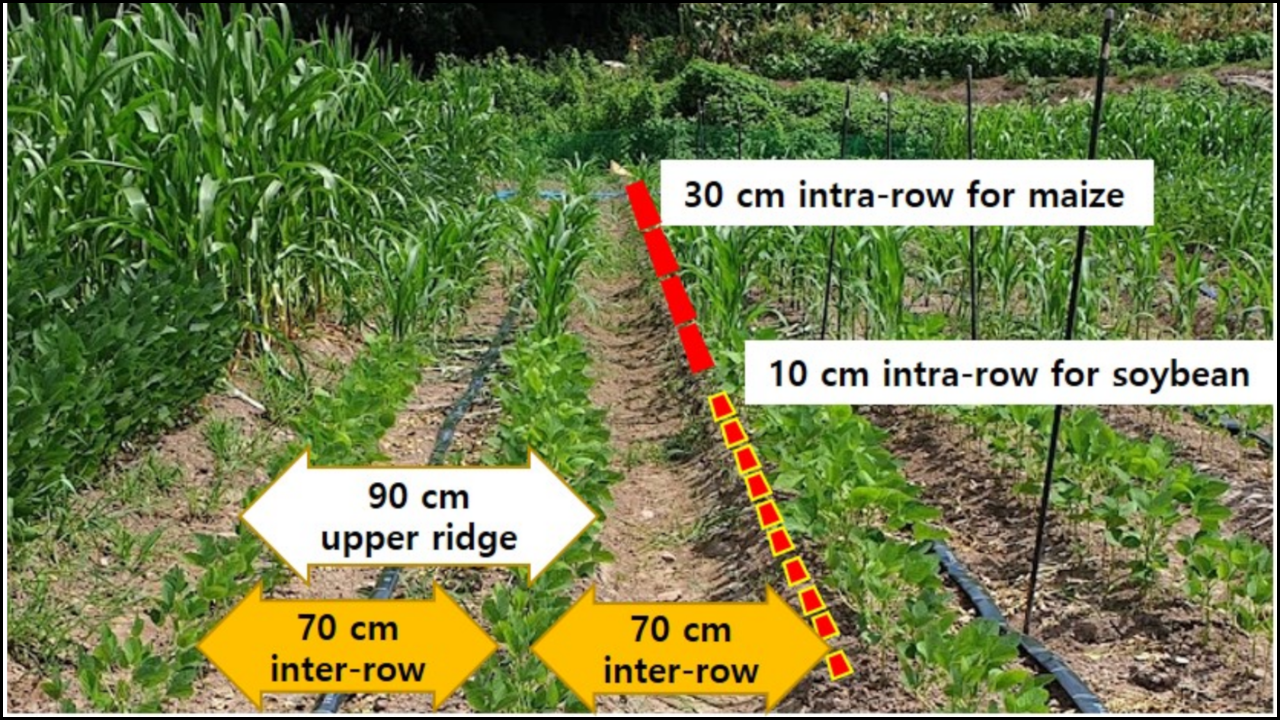
Plant density plays a crucial role in determining the growth, yield, and grain quality of maize. In modern agriculture, optimizing plant spacing is essential to achieve maximum productivity without compromising crop health or soil resources. Maize, being a high-demand cereal crop, responds significantly to variations in population density, affecting factors such as light interception, nutrient uptake, and kernel development. Understanding the relationship between plant density and maize performance helps farmers balance yield quantity with grain quality. The following content explains the influence of different planting densities on maize yield, physiological growth, and quality parameters in detail.
Table of Contents
Concept of Plant Density in Maize Cultivation
Plant density refers to the number of maize plants grown per unit area, usually expressed as plants per hectare.
Optimal density depends on hybrid variety, soil fertility, water availability, and management practices.
Low density allows more space for each plant, while high density promotes competition for light, nutrients, and water.
Proper density management ensures balanced plant growth and optimal resource utilization.
Aspect
Description
Definition
Number of maize plants per unit area (plants/ha).
Typical Range
50,000 – 90,000 plants per hectare.
Determining Factors
Variety, soil type, irrigation, and nutrient availability.
Objective
To achieve maximum yield with stable grain quality.
Effect of Plant Density on Growth Parameters
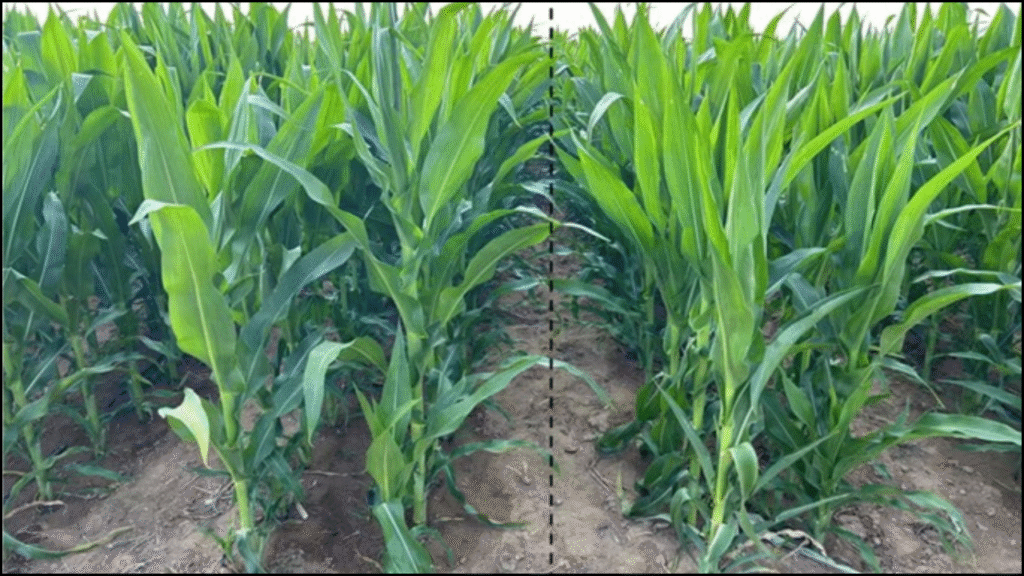
High density enhances early canopy development but reduces individual plant size.
Low density promotes larger leaves and thicker stems but limits total biomass per area.
Plant height often increases with crowding as plants compete for sunlight.
Leaf area index (LAI) improves under moderate density, aiding efficient photosynthesis.
Root development may decline under excessive density due to nutrient competition.
Growth Parameter
Low Density Effect
High-Density Effect
Plant Height
Moderate height, strong stems.
Taller, thinner plants are prone to lodging.
Leaf Area Index (LAI)
Lower LAI and slower canopy closure.
Higher LAI but risk of shading lower leaves.
Stem Thickness
Thicker and more stable stems.
Thinner stems, more competition stress.
Root Growth
Deep and wide roots.
Restricted root spread and weaker anchorage.
Biomass Production
Moderate per area.
High initially, but can decline with stress.
Impact on Photosynthesis and Light Interception
Moderate plant population ensures maximum light interception and efficient photosynthetic activity.
Dense planting leads to shading, reducing light penetration to lower leaves.
Sparse planting wastes sunlight due to larger gaps between plants.
Balanced light distribution across the canopy maximizes photosynthetic efficiency.
Density Level
Light Interception (%)
Photosynthetic Efficiency
Low (50,000/ha)
65–70%
Moderate efficiency, less canopy overlap.
Optimal (70,000/ha)
85–90%
Maximum light capture, efficient photosynthesis.
High (90,000/ha)
95%+ (upper leaves only)
Reduced lower leaf activity due to shading.
Effect of Plant Density on Yield Components
The number of ears per plant decreases as density increases, but the total ear count per hectare rises.
Kernel number per ear tends to reduce under high population due to limited nutrient supply.
Grain weight decreases in crowded conditions because of restricted photosynthate flow to kernels.
A moderate plant population ensures optimal ear development and grain filling.
Yield Component
Low Density
Optimal Density
High Density
Ears per Plant
1.1–1.3
1.0
0.8–1.0
Kernels per Ear
500–600
450–550
350–450
Thousand Kernel Weight (g)
320–340
300–320
270–290
Grain Yield (t/ha)
4.5–5.0
6.5–7.0
5.5–6.0
Influence on Nutrient Uptake and Soil Utilization
Higher density enhances nutrient uptake per hectare but reduces uptake efficiency per plant.
Nitrogen and phosphorus are most affected under crowded conditions due to competition.
Uniform spacing improves nutrient absorption by roots across the soil profile.
Balanced fertilizer management becomes essential to sustain yield at high densities.
Nutrient
Effect at High Density
Effect at Optimal Density
Nitrogen (N)
Rapid depletion, lower per-plant uptake.
Efficient absorption and utilization.
Phosphorus (P)
Reduced mobility and uptake per root.
Adequate availability and balanced growth.
Potassium (K)
Uneven distribution, leading to weaker stalks.
Proper supply ensuring strong stem development.
Micronutrients
Dilution effect on individual plants.
Balanced concentration in tissues.
Effect on Water Use Efficiency (WUE)
Water demand rises with increasing plant population due to higher transpiration.
Excessive density causes moisture stress, particularly in rainfed systems.
A moderate population enhances water-use efficiency by aligning plant transpiration and evaporation balance.
Deficit irrigation combined with optimal density improves drought tolerance.
Density Level
Water Use (mm)
WUE (kg grain/mm water)
Low
350–400
13.5
Optimal
420–450
16.8
High
500–520
14.2
Effect on Grain Quality
High-density crops produce smaller kernels with lower test weight.
Low density enhances grain filling, resulting in better protein and starch accumulation.
A balanced population maintains desirable grain size, color, and moisture content.
Excess crowding may increase kernel defects and reduce market value.
Quality Parameter
Low Density
Optimal Density
High Density
Grain Size
Large and uniform.
Medium, good quality.
Small, uneven.
Test Weight (g/L)
780–800
750–770
710–730
Protein Content (%)
10.5–11.2
9.8–10.3
9.0–9.5
Starch Content (%)
70–72
68–70
65–67
Moisture (%)
Moderate
Balanced
High at harvest, slower drying.
Economic Implications of Plant Density
Seed cost increases with a higher plant population per hectare.
Optimal density provides the best return on investment through higher yield and better grain quality.
Low density results in underutilized land resources and lower profit margins.
High density may increase labor and input costs due to greater nutrient and water requirements.
Density Level
Seed Cost (₹/ha)
Grain Yield (t/ha)
Net Return (₹/ha)
Low (50,000 plants)
2,500
5.0
60,000
Optimal (70,000 plants)
3,000
7.0
90,000
High (90,000 plants)
3,800
6.0
72,000
Management Practices for Optimizing Plant Density
Hybrid selection based on tolerance to crowding stress.
Row spacing adjustment (typically 60–75 cm) for uniform sunlight distribution.
Fertilizer application in split doses to match crop demand.
Regular irrigation during tasseling and grain filling for moisture balance.
Timely thinning in overpopulated fields to maintain plant health.
Practice
Purpose
Hybrid Selection
Choose varieties suited for high-density planting.
Row Spacing Adjustment
Improve air circulation and reduce disease incidence.
Balanced Fertilization
Match nutrient supply to population density.
Moisture Management
Maintain consistent soil water for even growth.
Weed and Pest Control
Reduce stress competition under dense canopies.
Environmental and Agronomic Considerations
High density may lead to nutrient leaching and soil nutrient depletion.
Low density can increase soil erosion risk due to bare patches.
Proper density ensures balanced ecosystem functioning and sustainable productivity.
Reduced chemical input is possible when plant competition is optimized.
Key Takeaways
Plant density strongly influences maize yield, growth, and grain quality. A balanced approach between low and high population densities ensures efficient resource utilization and stable productivity. Excessive crowding may enhance total biomass but reduce kernel quality and grain size, while sparse planting underuses soil and sunlight. Optimal plant density, when combined with appropriate fertilization, irrigation, and hybrid selection, helps farmers achieve high yields with superior grain quality, promoting both economic and environmental sustainability.
She is a creative and dedicated content writer who loves turning ideas into clear and engaging stories. She writes blog posts and articles that connect with readers. She ensures every piece of content is well-structured and easy to understand. Her writing helps our brand share useful information and build strong relationships with our audience.