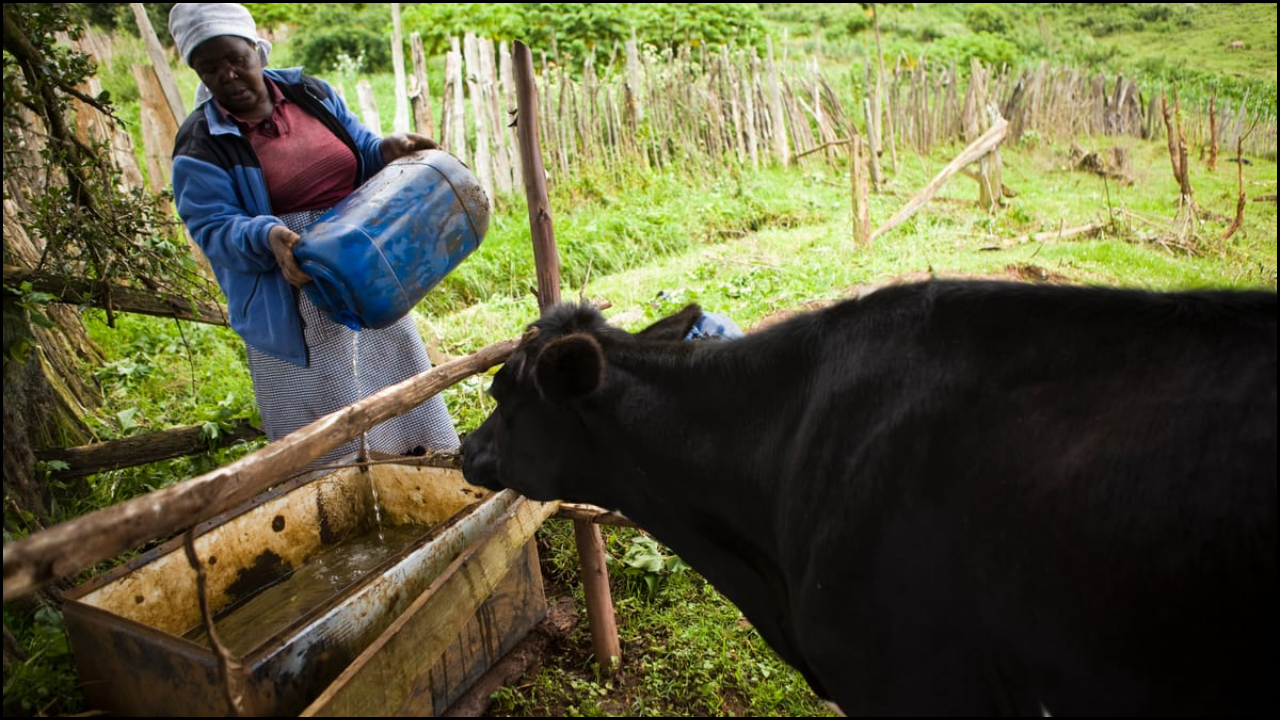
Agricultural sustainability depends largely on how the soil is managed during cultivation. Conventional tillage and no-till farming represent two contrasting soil management systems that significantly influence soil health, water conservation, and crop productivity. Conventional tillage involves plowing, harrowing, and preparing the soil before planting, while no-till farming minimizes or eliminates soil disturbance by directly planting seeds into residue-covered soil. This article presents a detailed comparative analysis of these systems, highlighting their impact on soil fertility, yield, environment, and long-term sustainability.
Table of Contents
Meaning and Concept of Farming Systems
Conventional farming involves mechanical soil disturbance to prepare a fine seedbed, control weeds, and incorporate fertilizers.
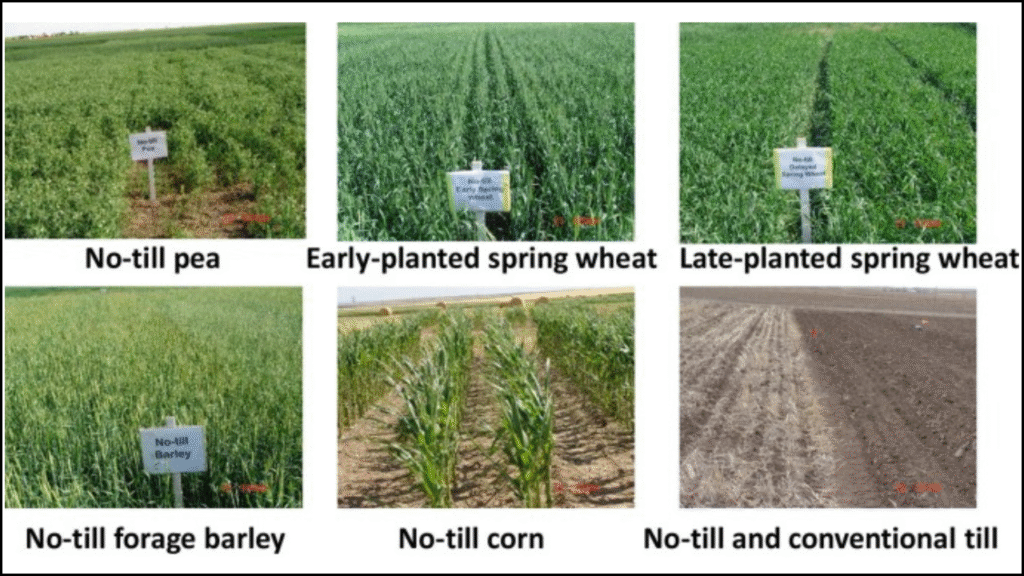
No-till farming maintains continuous soil cover and direct seeding without disturbing the soil layers.
The Objective of both systems is to achieve a good crop yield, but their approach and environmental impacts differ significantly.
Aspect
Conventional Farming
No-Till Farming
Definition
Farming practice involving soil tillage using plows and harrows.
Farming system avoiding mechanical disturbance; seeds are planted directly into the soil.
Core Principle
Soil preparation and aeration before sowing.
Soil protection and minimum disturbance.
Residue Management
Crop residues are usually removed or incorporated.
Crop residues left on the soil surface as cover.
Soil Disturbance
High
Very Low
Machinery Requirement
Intensive
Reduced
Soil Structure and Health
Soil aggregation improves under no-till systems due to minimal disturbance.
Organic matter retention is higher in no-till farming, enhancing soil fertility.
Erosion control is more effective in no-till due to surface residue protection.
Conventional tillage often leads to loss of topsoil and reduced organic carbon.
Soil compaction is lower in conventional systems initially, but may increase over time in no-till systems without proper management.
Parameter
Conventional System
No-Till System
Soil Aggregation
Reduced due to mechanical disturbance.
Improved through natural biological activity.
Organic Matter Content
Decreases over time.
Retained or increased with residue cover.
Erosion Risk
High due to bare soil.
Low because of surface residue protection.
Compaction
Initially low but may increase with machinery use.
Slightly higher in the early years, stabilizes later.
Microbial Activity
Disturbed frequently.
Enhanced due to a stable environment.
Water Conservation and Use Efficiency
No-till fields retain more soil moisture as surface residues reduce evaporation.
Infiltration rate improves under no-till due to stable soil pores and organic matter.
Conventional systems often lose moisture through frequent tillage and exposed surfaces.
Drought resistance is better under no-till systems.
Water runoff is higher in conventionally tilled soils.
Water Management Aspect
Conventional Farming
No-Till Farming
Evaporation Loss
High
Low
Water Infiltration
Reduced due to compacted layers.
Enhanced due to organic residues.
Runoff
Frequent during rainfall.
Reduced through residue cover.
Moisture Retention
Short-term only.
Long-term and consistent.
Drought Tolerance
Low
High
Weed Management
Conventional tillage effectively controls weeds by burying seeds and uprooting plants.
No-till systems rely more on chemical herbicides and crop rotations for weed control.
Surface residue in no-till suppresses weed germination by blocking sunlight.
Weed resistance may develop faster in no-till systems if herbicides are overused.
Integrated weed management is crucial in both systems to maintain effectiveness.
Weed Control Aspect
Conventional Farming
No-Till Farming
Primary Control Method
Mechanical tillage.
Herbicides and residue cover.
Weed Seed Burial
Deep burial prevents emergence.
Seeds remain near surface; germination is reduced by shading.
Weed Pressure Over Time
May reappear after rain or next tillage.
Gradually decreases with residue buildup.
Herbicide Dependence
Moderate
High
Long-Term Weed Balance
Fluctuating
Stabilized under residue management.
Nutrient Dynamics and Fertility
Nutrient availability fluctuates more in conventional systems due to frequent soil disturbance.
No-till soils show a gradual but stable nutrient distribution near the surface.
Microbial nutrient cycling is more active in no-till systems.
Fertilizer requirement is often higher in conventional systems due to nutrient loss by erosion.
Carbon sequestration improves significantly under no-till practices.
Nutrient Factor
Conventional System
No-Till System
Nutrient Mixing
Uniform due to plowing.
Stratified near surface.
Organic Carbon
Decreases over time.
Increases steadily.
Microbial Activity
Fluctuates with disturbance.
Stable and high.
Fertilizer Efficiency
Moderate due to leaching.
Improved by residue recycling.
Carbon Storage
Low
High
Crop Yield and Productivity
Yield variability is higher in no-till systems during the transition period.
Conventional tillage gives quick yield responses due to early nutrient availability.
Long-term productivity favors no-till due to improved soil structure and moisture.
Crop adaptability plays a crucial role in determining system success.
Climatic conditions influence yield outcomes differently under both systems.
Yield Parameter
Conventional Farming
No-Till Farming
Initial Yield Response
High due to easy nutrient access.
Moderate during adaptation period.
Long-Term Yield
Declines with soil degradation.
Increases as soil health improves.
Yield Stability
Variable with rainfall.
More stable under moisture conservation.
Crop Quality
Depends on fertilizer management.
Enhanced by soil nutrient balance.
Overall Productivity
Short-term focused.
Long-term sustainable.
Environmental Impacts
Conventional systems contribute to soil erosion, greenhouse gas emissions, and loss of biodiversity.
No-till farming promotes carbon sequestration, reduces energy use, and supports beneficial organisms.
Fuel consumption is significantly higher in conventional tillage due to multiple field operations.
Water pollution risk increases in both systems if herbicides or fertilizers are mismanaged.
Biodiversity preservation is better in no-till fields.
Environmental Aspect
Conventional System
No-Till System
Soil Erosion
High
Low
Carbon Emission
High due to fuel and decomposition.
Low through carbon storage.
Energy Requirement
High (multiple passes).
Low (fewer operations).
Biodiversity
Reduced by disturbance.
Enhanced under residue cover.
Water Quality Impact
Moderate to high.
Lower due to residue filtering.
Economic Considerations
Initial investment in no-till machinery can be high, but long-term savings are substantial.
Fuel and labor costs are lower in no-till due to reduced field operations.
Conventional tillage often demands higher maintenance and energy input.
Profitability improves in no-till systems over time through soil fertility preservation.
Government incentives in many regions support conservation tillage adoption.
Economic Factor
Conventional Farming
No-Till Farming
Initial Investment
Low
High (equipment cost)
Operational Cost
High due to multiple passes.
Low because of reduced tillage.
Fuel Usage
Significant
Minimal
Long-Term Profitability
Declines with soil degradation.
Improves with sustainability.
Maintenance Cost
Frequent
Occasional
Adoption Challenges and Management
Farmer perception often favors conventional methods due to familiarity.
Soil compaction management in no-till requires specialized tools.
Weed resistance poses challenges in continuous no-till systems.
Technical knowledge and training are essential for successful adoption.
A transition period of 3–5 years is needed for soil and ecosystem adjustment.
Challenge
Conventional Farming
No-Till Farming
Learning Requirement
Low
High
Weed Management
Easier mechanically.
Complex; chemical-based.
Machinery Needs
Common tools available.
Specialized seeders required.
Transition Difficulty
None
Moderate to high.
Soil Adaptation Time
Immediate
Gradual improvement.
Closing Reflections
Farming sustainability depends on selecting systems that balance productivity with environmental protection. Conventional farming provides immediate results but often degrades soil and increases long-term costs. In contrast, no-till farming emphasizes soil conservation, moisture retention, and ecosystem health, ensuring higher sustainability and profitability over time. Although initial adaptation may present challenges, the long-term ecological and economic benefits make no-till a viable and forward-looking approach to modern agriculture.
She is a creative and dedicated content writer who loves turning ideas into clear and engaging stories. She writes blog posts and articles that connect with readers. She ensures every piece of content is well-structured and easy to understand. Her writing helps our brand share useful information and build strong relationships with our audience.